
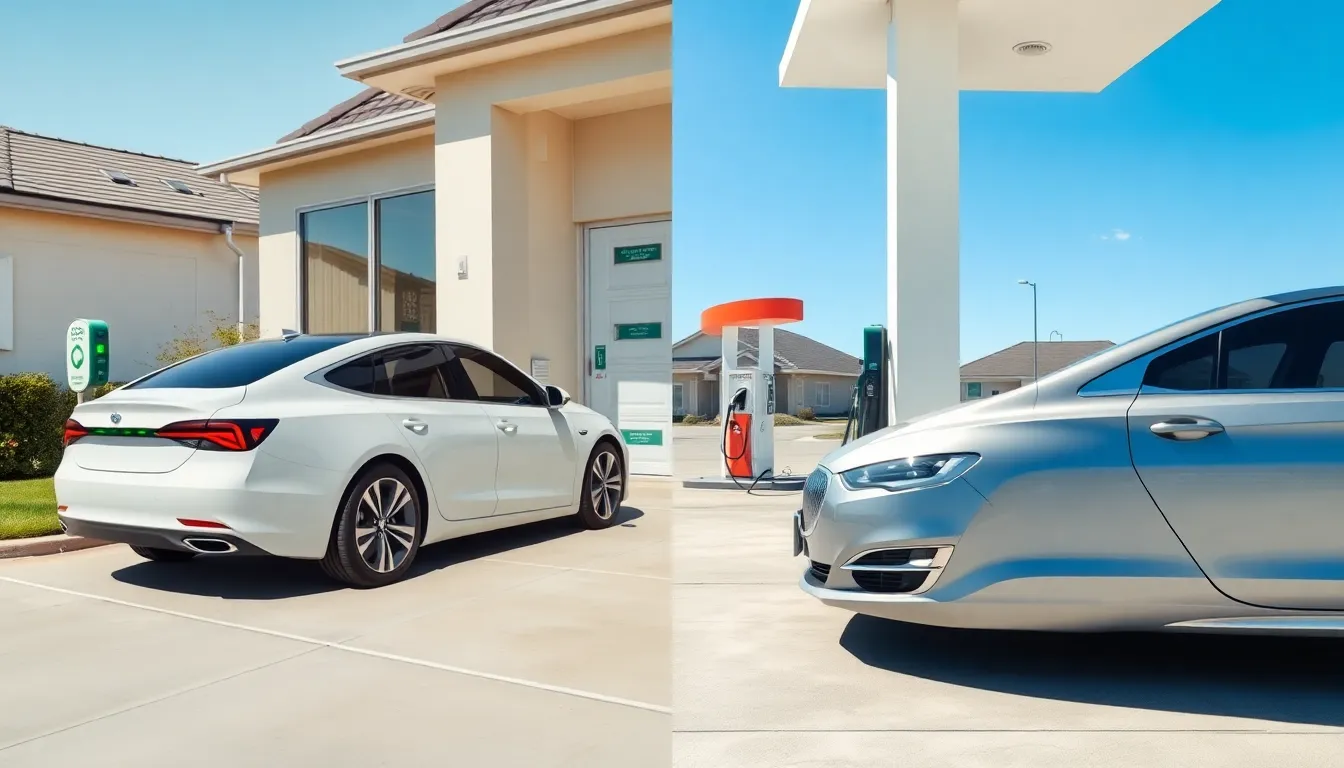
Electric vehicles vs gas cars, it’s the debate shaping how people buy their next set of wheels. With EV sales climbing and gas prices fluctuating, drivers want clear answers. Which option costs less over time? Which one performs better for daily commutes or road trips? This comparison breaks down the key differences between electric vehicles vs gas-powered cars. Readers will find practical insights on costs, efficiency, environmental impact, range, and maintenance. By the end, the decision between an EV and a traditional gas car should feel much simpler.
Table of Contents
ToggleKey Takeaways
- Electric vehicles vs gas cars favor EVs for long-term savings, with fuel costs roughly half that of gasoline per mile driven.
- EVs convert over 85% of energy into motion compared to only 20-30% for gas cars, making them significantly more efficient.
- Electric vehicles produce zero tailpipe emissions and generate 50-70% fewer lifecycle emissions than gas cars as the grid shifts to renewables.
- Most new EVs offer 200-300 miles per charge, which easily covers the average American’s daily driving of 37 miles.
- Annual maintenance costs for electric vehicles average $400-$600 compared to $800-$1,200 for gas cars due to fewer moving parts.
- Federal tax credits up to $7,500 plus state rebates can significantly reduce the higher upfront cost of electric vehicles.
Upfront Costs and Long-Term Savings
The sticker price for electric vehicles tends to run higher than gas cars. In 2024, the average new EV cost around $56,000, while the average gas car sat closer to $48,000. That gap has narrowed in recent years, though, as more affordable EV models hit the market.
But, electric vehicles vs gas cars tells a different story over time. Federal tax credits of up to $7,500 can slash EV purchase prices significantly. Many states offer additional rebates, bringing costs even lower.
Long-term savings favor EVs in several areas. Electricity costs less than gasoline per mile driven. According to the U.S. Department of Energy, powering an EV costs roughly half what it takes to fuel a gas car for the same distance. Over five years, EV owners can save thousands on fuel alone.
Insurance rates for electric vehicles run slightly higher on average. The difference usually amounts to a few hundred dollars annually. Still, when fuel savings enter the equation, EVs often come out ahead financially after the first few years of ownership.
Fuel and Energy Efficiency Differences
Electric vehicles convert over 85% of electrical energy into motion. Gas cars convert only about 20-30% of fuel energy into forward movement. The rest escapes as heat. This efficiency gap makes EVs cheaper to operate mile for mile.
A typical EV uses about 30 kWh to travel 100 miles. At the national average electricity rate of $0.16 per kWh, that’s roughly $4.80. A gas car getting 30 MPG would need over 3 gallons for the same distance. At $3.50 per gallon, that’s $11.67, more than double the cost.
Electric vehicles vs gas cars also differ in how they handle energy during stops. EVs use regenerative braking, which captures energy normally lost when slowing down. This feature extends range and improves overall efficiency, especially in city driving with frequent stops.
Gas cars lose efficiency in stop-and-go traffic. Their engines idle, burning fuel without moving the vehicle. EVs don’t have this problem, they simply stop using energy when stationary.
Environmental Impact and Emissions
Tailpipe emissions separate electric vehicles vs gas cars most clearly. EVs produce zero direct emissions. Gas cars release carbon dioxide, nitrogen oxides, and particulate matter with every mile.
The average gas car emits about 4.6 metric tons of CO2 annually. Over a typical 12-year lifespan, that adds up to over 55 metric tons per vehicle.
EVs aren’t entirely emission-free when considering the full picture. Manufacturing batteries requires energy and materials. Power plants generating electricity may burn fossil fuels. But, studies from the EPA and other agencies show EVs produce fewer lifetime emissions than gas cars in almost every U.S. region.
As the electrical grid shifts toward renewable sources, the environmental advantage of electric vehicles grows stronger. Solar and wind power continue expanding. By 2030, experts project EVs will produce 50-70% fewer lifecycle emissions than comparable gas vehicles.
Air quality improves in areas with high EV adoption. Cities with more electric vehicles report lower levels of smog and respiratory health issues.
Driving Range and Charging Infrastructure
Range anxiety remains a concern for potential EV buyers. Most new electric vehicles offer 200-300 miles per charge. Premium models like certain Tesla vehicles exceed 400 miles. Gas cars typically travel 300-500 miles per tank.
For daily driving, electric vehicles vs gas cars perform similarly. The average American drives about 37 miles per day. Even entry-level EVs handle weekly commutes without needing a midweek charge.
Charging infrastructure has expanded rapidly. The U.S. now has over 60,000 public charging stations with more than 150,000 individual ports. Home charging remains the most convenient option, owners plug in overnight and wake up to a full battery.
DC fast chargers can add 100-200 miles of range in 20-30 minutes. These stations work well for road trips. Apps like PlugShare help drivers locate chargers along any route.
Gas stations still outnumber charging stations significantly. But the gap closes each year. Major automakers and the federal government have committed billions to expand charging networks through 2030.
Maintenance and Reliability
Electric vehicles have fewer moving parts than gas cars. An EV drivetrain contains about 20 components. A gas engine has hundreds. Fewer parts mean fewer things that can break.
EVs don’t need oil changes, transmission fluid replacements, or spark plug swaps. Brake pads last longer due to regenerative braking. Annual maintenance costs for electric vehicles average $400-$600. Gas cars typically require $800-$1,200 yearly.
Battery longevity concerns many buyers. Modern EV batteries retain 80-90% capacity after 100,000 miles. Most manufacturers warranty batteries for 8 years or 100,000 miles. Replacement costs have dropped from $15,000 to around $5,000-$8,000 for many models.
Electric vehicles vs gas cars show different reliability patterns. EVs experience fewer engine-related failures. Gas cars face more frequent issues with exhaust systems, fuel pumps, and timing belts.
Tire wear runs slightly higher on EVs due to their heavier battery packs and instant torque delivery. Budget an extra set of tires every few years compared to a similar gas vehicle.