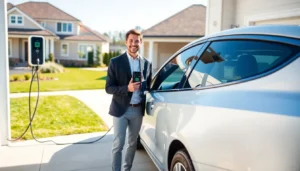

Electric vehicle strategies are reshaping how people and businesses approach transportation. Sales of EVs reached record highs in 2024, with global adoption climbing past 17 million units sold. This shift signals more than a trend, it reflects a fundamental change in how society views mobility, energy use, and environmental responsibility.
But buying an EV isn’t the same as having a strategy. Consumers face questions about charging infrastructure, range anxiety, and upfront costs. Businesses must weigh fleet conversion timelines against operational needs. Governments play their own role through tax credits, mandates, and infrastructure investments.
This article breaks down practical electric vehicle strategies for each of these groups. Whether someone is considering their first EV purchase or planning a company-wide fleet transition, the right approach can save money, reduce emissions, and future-proof transportation decisions.
Table of Contents
ToggleKey Takeaways
- Effective electric vehicle strategies require honest assessment of driving patterns, charging needs, and budget before purchasing.
- Consumers can maximize EV savings by timing purchases around model releases, dealer incentives, and available federal or state tax credits up to $7,500.
- Businesses should start fleet electrification with high-mileage, predictable-route vehicles and use pilot programs to refine their broader rollout plans.
- EVs cost 40-60% less to operate than gas vehicles over their lifetime, making total cost of ownership a critical factor in decision-making.
- Range anxiety can be overcome through planning apps like PlugShare and the expanding charging network along major routes.
- Government incentives and infrastructure investments, including $7.5 billion for charging stations, are accelerating EV adoption nationwide.
Understanding the Current EV Landscape
The electric vehicle market has matured rapidly over the past five years. In 2024, EVs accounted for approximately 18% of all new car sales globally. China leads adoption rates, followed by Europe and North America. Major automakers now offer dozens of EV models across sedans, SUVs, trucks, and commercial vehicles.
Battery technology continues to improve. Lithium-ion batteries remain dominant, but solid-state alternatives are entering production. Average EV range now exceeds 300 miles per charge for many models. Charging speeds have also increased, some vehicles can add 200 miles of range in under 20 minutes using DC fast chargers.
Charging infrastructure is expanding, though unevenly. Urban areas typically have more public charging stations than rural regions. Home charging remains the most common method for EV owners, with Level 2 chargers providing full overnight charges for most vehicles.
Prices are dropping. The average EV cost fell by roughly 20% between 2022 and 2024. Used EV markets are growing, making electric vehicles accessible to more buyers. Still, upfront costs remain higher than comparable gas-powered vehicles in most segments.
Adoption Strategies for Consumers
Smart electric vehicle strategies start with honest assessment. Consumers should evaluate their daily driving patterns before purchasing. Most Americans drive fewer than 40 miles per day, well within the range of even entry-level EVs.
Timing the Purchase
Buying at the right time can yield significant savings. New model releases often trigger discounts on previous-year vehicles. End-of-quarter sales periods frequently bring dealer incentives. Consumers should also check whether federal or state tax credits apply to their preferred models.
Choosing the Right Vehicle
Matching the vehicle to actual needs prevents overspending. A commuter who rarely takes road trips doesn’t need 400 miles of range. Families should prioritize cargo space and passenger comfort. Those with access to home charging can consider vehicles with slower public charging speeds, since they’ll rarely need them.
Planning for Charging
Home charging setup is essential for most EV owners. A Level 2 charger installation typically costs between $500 and $2,000, depending on electrical panel capacity and distance from the parking spot. Renters and apartment dwellers should research workplace charging options or nearby public stations before committing to an EV.
Consumers who plan road trips regularly should map charging networks along their common routes. Apps like PlugShare and A Better Route Planner help identify stations and estimate charging times.
Business and Fleet Electrification Approaches
Companies adopting electric vehicle strategies gain multiple advantages. Lower fuel and maintenance costs improve bottom lines. Reduced emissions help meet sustainability commitments. And employees increasingly prefer working for environmentally conscious employers.
Starting with High-Impact Vehicles
Fleet managers should prioritize vehicles with predictable routes and high daily mileage. Delivery vans, service vehicles, and company cars often make ideal candidates for early electrification. These vehicles return to the same location nightly, simplifying charging logistics.
Building Charging Infrastructure
Workplace charging stations serve both fleet vehicles and employee personal EVs. Businesses should assess electrical capacity at their facilities before installing chargers. Some utility companies offer commercial EV charging programs with reduced electricity rates during off-peak hours.
Managing the Transition Timeline
Rushing full electrification rarely works. A phased approach lets organizations learn from early deployments. Start with a pilot program of 5-10 vehicles. Gather data on charging patterns, maintenance needs, and driver feedback. Use these insights to refine the broader rollout plan.
Total cost of ownership calculations should guide purchasing decisions. EVs typically cost 40-60% less to operate than gas vehicles over their lifetime, even with higher purchase prices.
Government Policies and Incentives
Government support shapes electric vehicle strategies at every level. Federal tax credits in the United States can reduce EV purchase prices by up to $7,500 for new vehicles and $4,000 for used ones. But, eligibility depends on vehicle assembly location, battery sourcing, and buyer income limits.
State incentives vary widely. California offers additional rebates up to $7,500 for low-income buyers. Colorado provides a $5,000 state tax credit. Some states offer no incentives at all.
Infrastructure Investment
The federal government allocated $7.5 billion for EV charging infrastructure through the Infrastructure Investment and Jobs Act. This funding supports the National Electric Vehicle Infrastructure (NEVI) program, which focuses on building charging stations along interstate highways.
Local governments are updating building codes to require EV-ready parking in new construction. Zoning changes allow public charging stations in more locations.
Regulatory Requirements
Several states have adopted zero-emission vehicle mandates. California’s Advanced Clean Cars II rule requires all new cars sold in the state to be zero-emission by 2035. Other states have adopted similar standards. These regulations push automakers to expand EV offerings and improve affordability.
Overcoming Common EV Transition Challenges
Even well-planned electric vehicle strategies encounter obstacles. Range anxiety tops the list of consumer concerns. The solution lies in education, most daily driving falls well within EV capabilities. Planning apps and growing charging networks make longer trips practical.
Upfront costs remain a barrier for many buyers. Leasing offers a lower-commitment entry point. Used EVs provide another affordable option, though buyers should verify battery health before purchasing.
Charging access challenges affect renters and those without dedicated parking. Workplace charging programs, public station expansion, and curbside charging pilots are addressing this gap. Some cities now require landlords to permit tenant-installed chargers.
Cold Weather Considerations
EV range drops in cold temperatures, sometimes by 20-30%. Preconditioning the battery while plugged in helps. Drivers in cold climates should factor this into their vehicle selection, choosing models with larger batteries or heat pumps.
Resale Value Uncertainty
Rapid technology improvements create concerns about depreciation. But, data from 2024 shows EV resale values stabilizing as the market matures. Popular models from major manufacturers hold value better than lesser-known brands.