
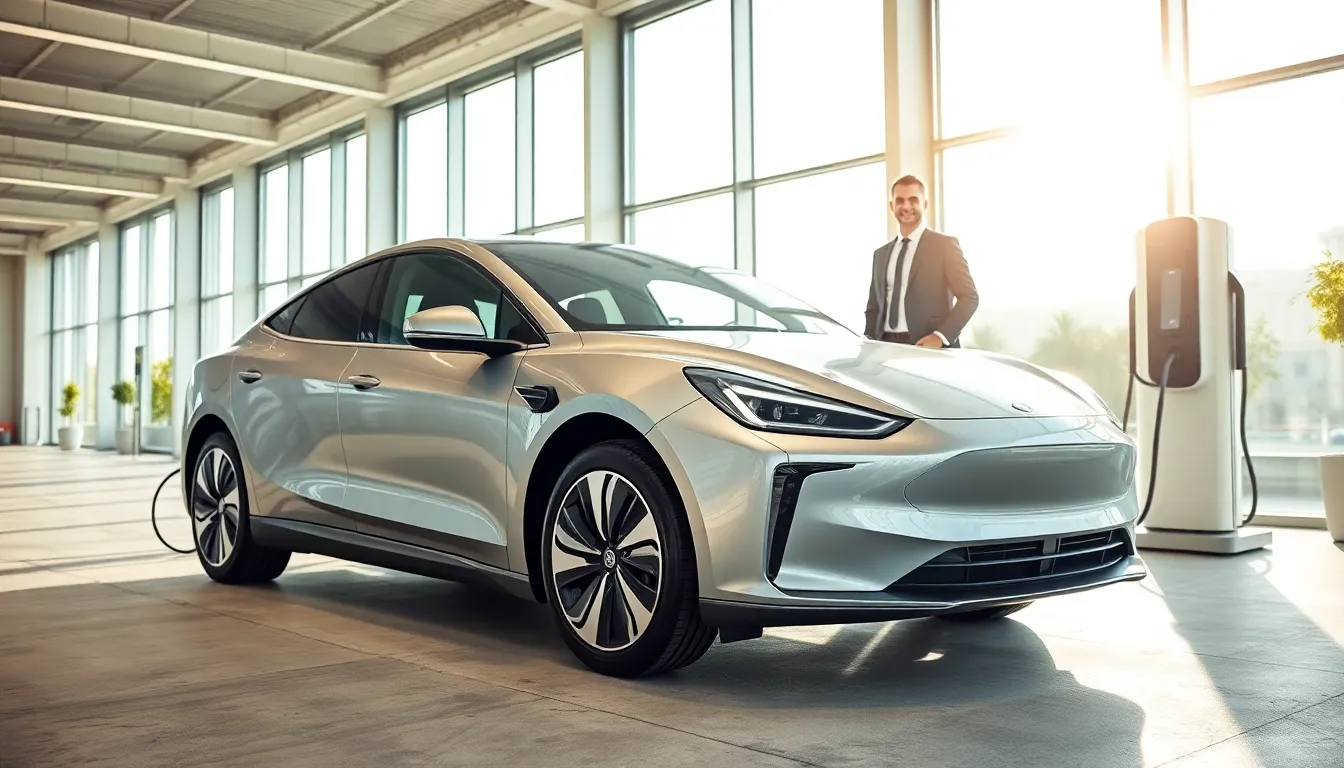
Electric vehicles are changing how people think about transportation. Sales hit record numbers in 2024, and automakers now offer dozens of models across every price range. Whether someone is shopping for their first EV or simply curious about the technology, understanding how these cars work, and what owning one actually looks like, matters more than ever.
This guide covers the essentials. It explains how electric vehicles operate, breaks down the different types available, and weighs the real benefits against the practical challenges. By the end, readers will have a clear picture of where electric transportation stands today and where it’s headed.
Table of Contents
ToggleKey Takeaways
- Electric vehicles use battery-powered motors with fewer moving parts, resulting in lower maintenance costs and about 50% less spent on repairs compared to gas cars.
- Three main types of EVs exist: Battery Electric Vehicles (BEVs) with 200-400 mile ranges, Plug-in Hybrids (PHEVs) for flexibility, and traditional Hybrids (HEVs) that can’t be plugged in.
- Owning an electric vehicle saves money on fuel—driving 100 miles costs $4-6 in electricity versus $12-15 in gas.
- Federal tax credits up to $7,500 and state incentives help offset the higher upfront cost of electric vehicles.
- Charging infrastructure is expanding rapidly, with the U.S. targeting 500,000 public chargers by 2030 and Tesla opening its Supercharger network to other brands.
- Battery technology continues to improve, with solid-state batteries expected by 2028 that could push EV ranges past 500 miles.
How Electric Vehicles Work
Electric vehicles run on battery-powered motors instead of gasoline engines. The core components include a large lithium-ion battery pack, an electric motor, and a power inverter. When a driver presses the accelerator, the battery sends electricity through the inverter, which converts direct current (DC) to alternating current (AC). The motor then uses that AC power to spin the wheels.
Regeneration plays a key role in EV efficiency. When the driver brakes or coasts, the motor reverses its function and acts as a generator. It captures kinetic energy and sends it back to the battery. This process, called regenerative braking, extends driving range and reduces wear on traditional brake pads.
Charging an electric vehicle works similarly to charging a phone, just on a much larger scale. Owners can plug into a standard 120-volt outlet (Level 1), a 240-volt home charger (Level 2), or public DC fast chargers (Level 3). Level 1 charging adds roughly 3-5 miles of range per hour. Level 2 chargers add 25-30 miles per hour. DC fast chargers can deliver 100+ miles in about 20 minutes.
Electric vehicles contain far fewer moving parts than gas-powered cars. There’s no transmission, no exhaust system, and no oil changes. This simplicity means fewer things can break down over time.
Types of Electric Vehicles Available Today
Not all electric vehicles are built the same. The market currently offers three main categories, each with distinct characteristics.
Battery Electric Vehicles (BEVs) run entirely on electricity. They have no gas engine and produce zero tailpipe emissions. Popular examples include the Tesla Model 3, Chevrolet Bolt, and Ford Mustang Mach-E. BEVs typically offer ranges between 200-400 miles per charge, depending on the model and driving conditions.
Plug-in Hybrid Electric Vehicles (PHEVs) combine an electric motor with a gasoline engine. Drivers can use electric power for short trips, usually 20-50 miles, then switch to gas for longer drives. The Toyota RAV4 Prime and Chrysler Pacifica Hybrid fall into this category. PHEVs appeal to buyers who want EV benefits but aren’t ready to commit fully.
Hybrid Electric Vehicles (HEVs) use both an electric motor and a gas engine, but the battery charges only through regenerative braking. Owners can’t plug these vehicles in. The Toyota Prius remains the most recognizable HEV. While hybrids improve fuel economy, they still rely primarily on gasoline.
Electric vehicles now span every segment: compact sedans, SUVs, pickup trucks, and luxury models. Rivian builds electric trucks. BMW offers electric SUVs. Porsche sells the Taycan sports car. Buyers in 2025 have more choices than ever before.
Benefits of Owning an Electric Vehicle
The advantages of electric vehicles extend beyond environmental impact. Owners see tangible benefits in their daily lives.
Lower operating costs top the list. Electricity costs less than gasoline in most regions. Driving 100 miles in an EV might cost $4-6 in electricity, compared to $12-15 in a comparable gas car. Over years of ownership, these savings add up significantly.
Reduced maintenance also saves money. Electric vehicles don’t need oil changes, spark plugs, or timing belts. Brake pads last longer thanks to regenerative braking. A 2024 study from Consumer Reports found that EV owners spend about 50% less on maintenance compared to gas vehicle owners.
Environmental benefits matter to many buyers. Electric vehicles produce zero direct emissions. Even when accounting for electricity generation, EVs typically create fewer greenhouse gases than gas cars over their lifetime. As the power grid shifts toward renewable energy, this advantage grows.
Performance surprises people. Electric motors deliver instant torque. Many EVs accelerate faster than sports cars costing twice as much. The Tesla Model S Plaid hits 60 mph in under 2 seconds. Even affordable electric vehicles feel responsive and quick.
Tax incentives reduce upfront costs. The federal government offers credits up to $7,500 for qualifying electric vehicles. Many states add their own incentives. These programs make EVs more accessible to average buyers.
Challenges and Considerations for EV Owners
Electric vehicles aren’t perfect for everyone. Prospective buyers should weigh several practical factors.
Charging infrastructure remains uneven. Urban areas and major highways have plenty of charging stations. Rural regions? Not so much. Road trips require planning around charger locations. Apps like PlugShare help, but spontaneity takes a hit.
Charging time differs dramatically from filling a gas tank. A five-minute gas station stop becomes a 20-40 minute charging session, even with fast chargers. For daily commuting with home charging, this rarely matters. For long-distance travel, it changes the experience.
Higher upfront costs deter some buyers. Electric vehicles generally cost more than comparable gas models, though the gap is shrinking. A base Tesla Model 3 starts around $40,000. Similar gas sedans might cost $30,000. Tax credits and lower operating costs can offset this difference over time.
Range anxiety affects new EV owners psychologically. Most modern electric vehicles travel 250+ miles per charge, more than enough for typical daily driving. Still, watching the battery percentage drop on a highway triggers real stress for some drivers.
Battery degradation happens slowly. EV batteries lose capacity over time, similar to smartphone batteries. Most manufacturers warranty batteries for 8 years or 100,000 miles. Studies show that average degradation runs about 2% per year. A 10-year-old EV might retain 80% of its original range.
Cold weather impacts range. Batteries perform less efficiently in freezing temperatures. An EV rated for 300 miles might deliver only 200 miles in extreme cold. Owners in northern climates should factor this into their calculations.
The Future of Electric Transportation
Electric vehicles represent just the beginning of a larger shift. Several trends point toward an electrified future.
Battery technology keeps improving. Solid-state batteries promise higher energy density, faster charging, and longer lifespans. Toyota and several startups aim to commercialize this technology by 2028. These advances could push ranges past 500 miles while cutting costs.
Charging networks are expanding rapidly. The U.S. government allocated billions toward building 500,000 public chargers by 2030. Tesla opened its Supercharger network to other brands. Charging an electric vehicle will become as convenient as finding a gas station.
Automakers have committed fully. General Motors plans to sell only electric vehicles by 2035. Ford, Volkswagen, and Mercedes-Benz have announced similar goals. New EV models arrive every month. By 2030, electric options will dominate dealer lots.
Prices will continue falling. Battery costs dropped 90% between 2010 and 2024. As manufacturing scales up, electric vehicles will reach price parity with gas cars, possibly within the next few years.
Beyond cars, electrification spreads everywhere. Electric buses now serve cities worldwide. Electric trucks from Tesla, Rivian, and others carry freight. Electric aircraft are in development. The transportation sector is transforming piece by piece.